
Learn
Understand the decision before you make it.
Guides walk you through each stage. Insights answer one question at a time — with the numbers shown, and what could change the answer.
Featured insight · Choosing your loan
What changes when you put more money down?
A larger down payment lowers what you borrow and what you pay each month. It also lowers the cash you keep. The right amount balances the two.
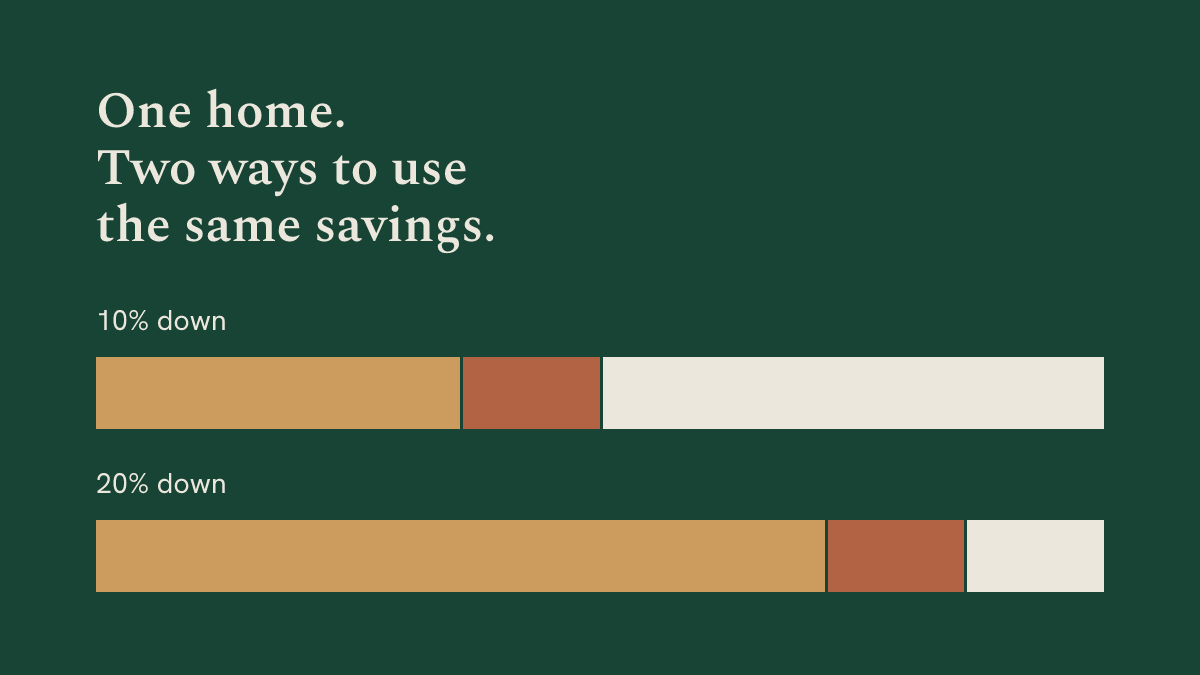
One home. Two ways to use the same savings.
-
10% down · $40,000 $55,000 kept
Of $110,000 saved: $40,000 down payment, $15,000 other upfront costs, $55,000 kept.
-
20% down · $80,000 $15,000 kept
Of $110,000 saved: $80,000 down payment, $15,000 other upfront costs, $15,000 kept.
$40,000 more in the home.
$40,000 less for life after closing.
Guides
Start with the essentials.
Buying a home
Get oriented, prepare, and understand your options.
First-Time Buyers
The full walkthrough, from getting oriented to closing day.
Getting Pre-Approved
What to prepare, what lenders review, and how pre-approval differs from pre-qualification.
Loan Programs
Understand how conventional, FHA, VA, and USDA loans differ.
Georgia Housing
What's specific to buying and owning a home here.
Refinancing
Explore what a change to your mortgage could mean.
Insights
One question, answered clearly.
Each insight gives the answer first, shows an example, and names what could change it for you.
-
Before you make an offer
A lower price or a seller credit?
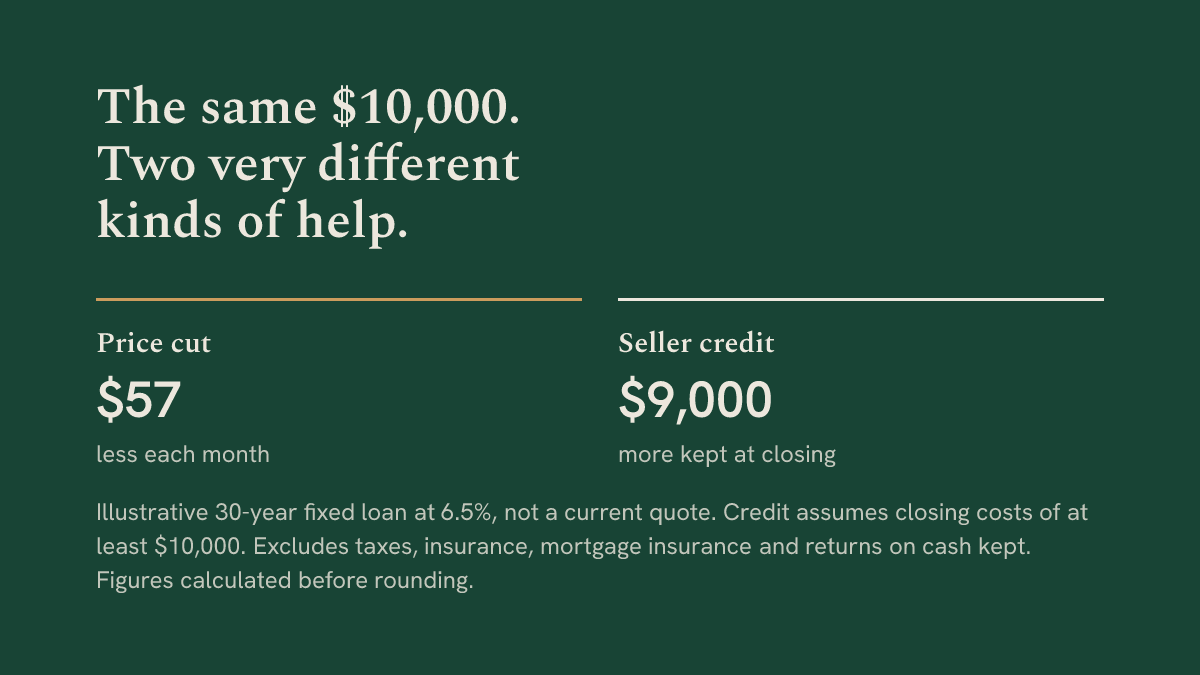
A price cut lowers your monthly payment a little, every month. A seller credit lowers the cash you need at closing a lot, once. Ask for the one that eases whatever is tighter for you.
-
Choosing your loan
What changes when you put more money down?
A larger down payment lowers what you borrow and what you pay each month. It also lowers the cash you keep. The right amount balances the two.
Mortgage Basics
Words worth knowing — and where they come from.
Plain definitions, with the history that makes them easier to remember.
- Mortgage
- Old French mort gage, “dead pledge”
- A loan secured by your home. The pledge “dies” when the loan is paid off.
- Amortize
- Old French amortir, “to deaden”
- Paying a loan down on a schedule, so each payment extinguishes a little more of it.
- Escrow
- Old French escroe, “scrap of parchment”
- Money or documents held by a neutral party until conditions are met.
The Kinship Brief
Once a month, what moved — and what it means for you.
Rates, the Georgia market, and one decision worth thinking through. No daily noise.
Have a specific question?
A short conversation is often faster than searching for the answer.